
Who Owns OpenClaw? The Founder & Company Behind It
Who Owns OpenClaw? The Founder, the Foundation & the Numbers
Search "who owns openclaw" and the honest answer is: no single company does — that surprises people who assume 247,000+ GitHub stars means a well-funded startup sits behind it. The real story runs through one Austrian developer, a foundation, and a licensing decision that keeps it that way.
Key Takeaways
- OpenClaw was created by Austrian developer Peter Steinberger and launched in November 2025 as "Clawdbot," reaching 247,000+ GitHub stars and 47,700+ forks in under a year.
- The project has been renamed twice — Clawdbot to Moltbot after trademark pressure, then to OpenClaw three days later — and all three names still carry meaningful search volume.
- Steinberger joined OpenAI in February 2026, but OpenClaw itself moved to an independent foundation under the GNU 3.0 license, not into OpenAI's ownership.
- OpenClawHQ, the $49/month managed hosting service, is a separate company built on top of the open-source project — not a rebrand and not a corporate parent.
Who Owns OpenClaw?
No company owns OpenClaw. Austrian developer Peter Steinberger built it, but since February 2026 the codebase has been governed by an independent open-source foundation under the GNU General Public License 3.0 — a license that legally prevents any single company, including OpenAI, from taking exclusive control. Ownership, in the corporate sense most people mean when they ask this question, doesn't apply here.
| Fact | Detail |
|---|---|
| Creator | Peter Steinberger (Austrian developer) |
| Original launch name | Clawdbot — November 2025 |
| Current governance | Independent open-source foundation |
| License | GNU General Public License 3.0 |
| GitHub stars | 247,000+ (as of March 2026) |
| Forks | 47,700+ |
| Corporate owner | None |
That table alone answers most of what people searching "who owns openclaw" actually want to know. The rest of this article fills in how it got there.
Who Built OpenClaw and When Did It Launch?
Peter Steinberger built OpenClaw as a side project and released it in November 2025 under the name "Clawdbot." It went viral almost immediately, growing from a niche release to hundreds of thousands of GitHub stars within months — a pace few open-source AI tools have ever matched.
Steinberger didn't launch with a company, a funding round, or a press cycle behind him. He shipped code, and developers noticed. Within weeks, "Clawdbot" was showing up in AI newsletters and developer forums — not because of marketing, but because it did something most agent tools didn't: it ran inside the messaging apps people already used instead of demanding a new interface.
- Launched: November 2025, as "Clawdbot"
- Built by: one individual developer, no founding team announced
- Initial distribution: GitHub, word of mouth, developer communities
- Funding at launch: none disclosed — no venture round, no seed round
By the numbers: Clawdbot's original name still pulls roughly 60,500 searches a month — proof that a huge slice of its early audience never updated their search habits.
What Is Peter Steinberger's Background?
Steinberger isn't a first-time founder. Before OpenClaw, he built PSPDFKit, a PDF-rendering software company that took outside investment from Insight Partners — reportedly over €100 million — before he sold his shares and stepped back from day-to-day operations.
That prior exit matters for credibility. OpenClaw wasn't a first attempt at building something developers rely on; it was a second act from someone who had already run a venture-backed software company through an acquisition-scale outcome. He started OpenClaw independently, without outside capital, which is part of why the project has no investor cap table to point to.
Worth knowing: A founder with a prior successful exit choosing to launch OpenClaw with zero outside funding is itself a signal — he wasn't chasing an investor round, he was solving a problem he wanted solved.
Why Does OpenClaw Have Three Different Names?
OpenClaw launched as "Clawdbot" in November 2025, was renamed "Moltbot" on January 27, 2026 after trademark pressure, then renamed again to "OpenClaw" just three days later, on January 30, 2026. All three names still generate real search traffic today.
The rename wasn't a rebrand for marketing reasons — it was a defensive move. "Clawdbot" drew trademark concerns tied to naming similarity in the AI space, and rather than fight it out publicly, Steinberger moved fast to a new name. "Moltbot" lasted barely a week before "OpenClaw" — a name that doubled as a statement about the project's open-source commitment — replaced it for good.
| Name | Active dates | Monthly search volume |
|---|---|---|
| Clawdbot | Nov 2025 – Jan 27, 2026 | 60,500 |
| Moltbot | Jan 27 – Jan 30, 2026 | 27,100 |
| OpenClaw | Jan 30, 2026 – present | 165,000 |
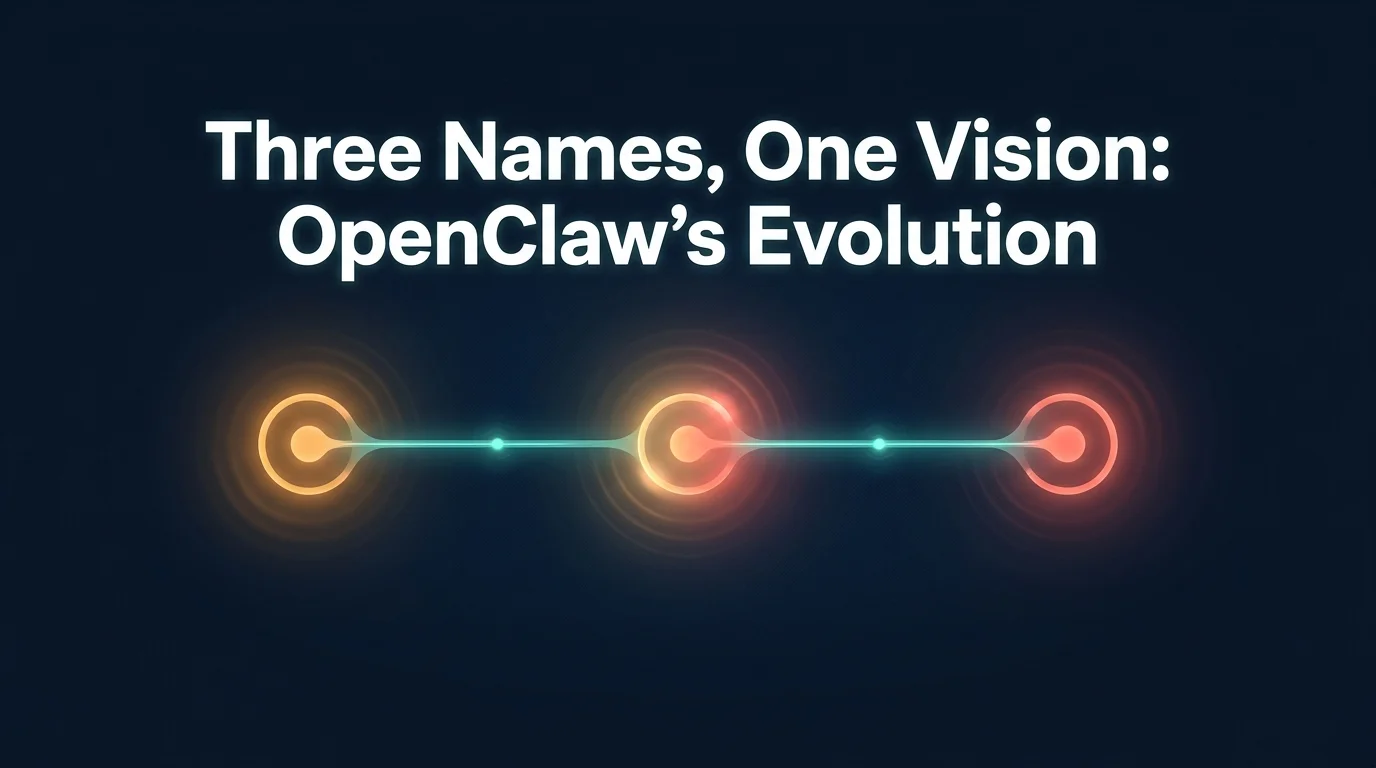 Three names in three months — each still carries its own slice of monthly search traffic.
Three names in under three months could have killed a smaller project's momentum. Instead, each rename generated its own news cycle, and cumulative search interest across all three names now exceeds 250,000 monthly searches combined.
Who Owns OpenClaw Now That OpenAI Hired the Founder?
OpenAI did not acquire OpenClaw. In February 2026, OpenAI hired Steinberger — an "acquihire" of the person, not a purchase of the software — and OpenClaw moved to an independent foundation under the GNU 3.0 license. That license is irrevocable, meaning no company, including OpenAI, can make the codebase proprietary or shut it down.
This is the single most-searched confusion around OpenClaw's ownership, and it's worth being precise about. Steinberger announced the move on his personal blog, explicitly stating OpenClaw would "move to a foundation and stay open and independent" — a condition he negotiated for before joining OpenAI, not an afterthought.
- GNU 3.0 license: any fork or future version must remain open-source permanently
- Foundation governance: no single company holds a controlling stake
- OpenAI's role: employs the founder, has no special rights over the codebase
- OpenClawHQ's role: an independent managed-hosting company, not affiliated with OpenAI or the foundation
We covered the full mechanics of this — including the exact timeline and why headlines got it wrong — in our breakdown of whether OpenAI acquired OpenClaw.
How Many People Contribute to OpenClaw's Growth?
OpenClaw's growth isn't driven by a corporate team — it's community-built. The project has 247,000+ GitHub stars and 47,700+ forks as of March 2026, with an active base of outside contributors submitting pull requests, custom skills, and channel integrations on top of the core codebase.
A fork count that high signals something beyond popularity — it means tens of thousands of developers have pulled the code down to build their own variant, integration, or experiment. That's a much stronger trust signal than stars alone, since forking requires actual technical intent, not a passive click.
Reality check: 47,700 forks isn't a vanity metric. Each one represents a developer who decided the codebase was worth building on top of — not just admiring from a distance.
You can verify all of this directly — OpenClaw's GitHub repository shows the current star count, fork count, and commit history in real time, alongside the open contributor list.
Is OpenClaw Still Actively Developed?
Yes. Development continues through the independent foundation and an active community of outside contributors, with regular commits and new skill integrations landing continuously since the February 2026 governance change. The GNU 3.0 license guarantees this continues regardless of Steinberger's employer.
That's a structural advantage most proprietary AI tools can't claim. If a single company controlled OpenClaw, a strategy shift, a pricing change, or an acquisition could threaten the software's future. Foundation governance under an irrevocable open-source license removes that single point of failure entirely.
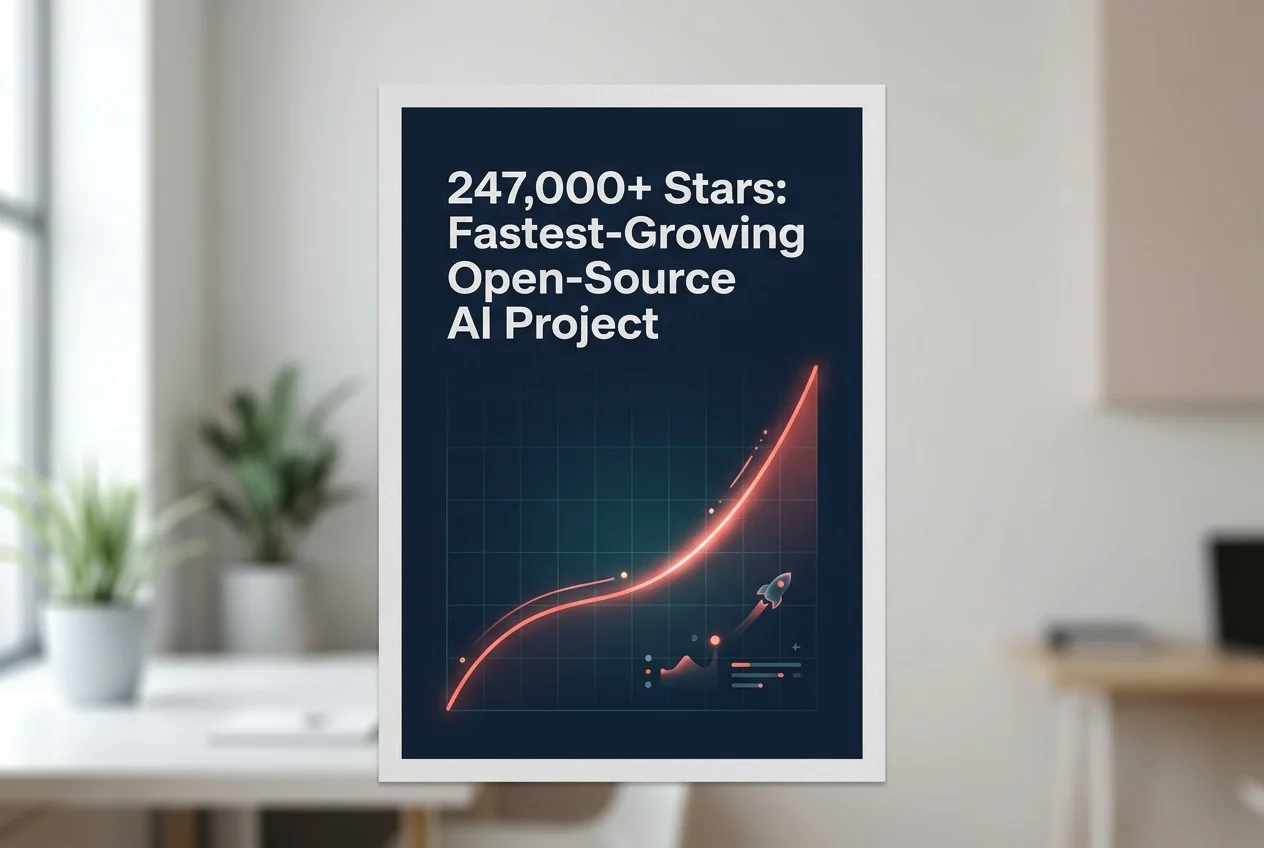 A near-vertical growth curve — the kind of trajectory venture-backed startups spend years chasing.
The project's open-source nature is also why the community keeps building on OpenClaw rather than around it — anyone curious about verifying the raw commit history can check it directly rather than taking a headline's word for it.
Why OpenClawHQ Was Built: Solving the Setup Problem
 The open-source project proved demand fast — self-hosting it proved to be the harder problem.
OpenClawHQ exists because Steinberger's open-source project is powerful but hard to run yourself. Self-hosting OpenClaw requires a dedicated server, Node.js 24, CLI configuration, and ongoing maintenance — a wall most non-technical business owners hit within their first 15 minutes of trying.
OpenClawHQ isn't a fork, a rebrand, or a corporate takeover of the open-source project — it's a separate managed-hosting company, operated by Hyathi Technologies, that runs OpenClaw on your behalf. You get your own private instance, fully configured, with unlimited usage for $49/month flat, and no server or API keys to manage yourself.
- No dedicated server or VPS required
- No Node.js installation or CLI setup
- No separate LLM API keys or token billing
- Live within minutes of signup instead of hours of configuration
That's the gap OpenClawHQ fills — not owning OpenClaw, but making the free, open-source project usable for the business owner who wants results, not a command line. For more on whether the company behind that offer is trustworthy, see our full breakdown of OpenClawHQ's legitimacy.
Get Started with OpenClawHQ
Now that you know OpenClaw answers to no corporate owner — just an open-source foundation and its creator's original intent — the only remaining question is whether you want to run it yourself or skip the setup entirely. OpenClawHQ gets your private, fully configured instance live in minutes for $49/month flat.
No server. No coding. No token fees — just OpenClaw, managed for you.
Frequently Asked Questions
Who owns OpenClaw? No company owns OpenClaw. Austrian developer Peter Steinberger created it, but since February 2026 the project has been governed by an independent open-source foundation under the GNU 3.0 license, which legally prevents any single company from controlling it.
Is OpenClaw owned by OpenAI? No. OpenAI hired Steinberger in February 2026, but that's an employment arrangement, not a software acquisition. OpenClaw moved to an independent foundation at the same time, and OpenAI has no ownership or special rights over the codebase.
Who is the founder of OpenClaw? Peter Steinberger, an Austrian developer who previously built PSPDFKit before selling his shares, founded OpenClaw and launched it as "Clawdbot" in November 2025. It was renamed twice — to "Moltbot," then "OpenClaw" — before reaching its current name on January 30, 2026.
Is OpenClawHQ the same company as OpenClaw? No. OpenClaw is the free, open-source software governed by an independent foundation. OpenClawHQ is a separate managed-hosting service, operated by Hyathi Technologies, that runs a private OpenClaw instance for customers who don't want to self-host for $49/month flat.