
OpenClaw Open Source: By the Numbers | OpenClawHQ
OpenClaw Open Source: The Numbers Behind 247K Stars (And What It Means for You)
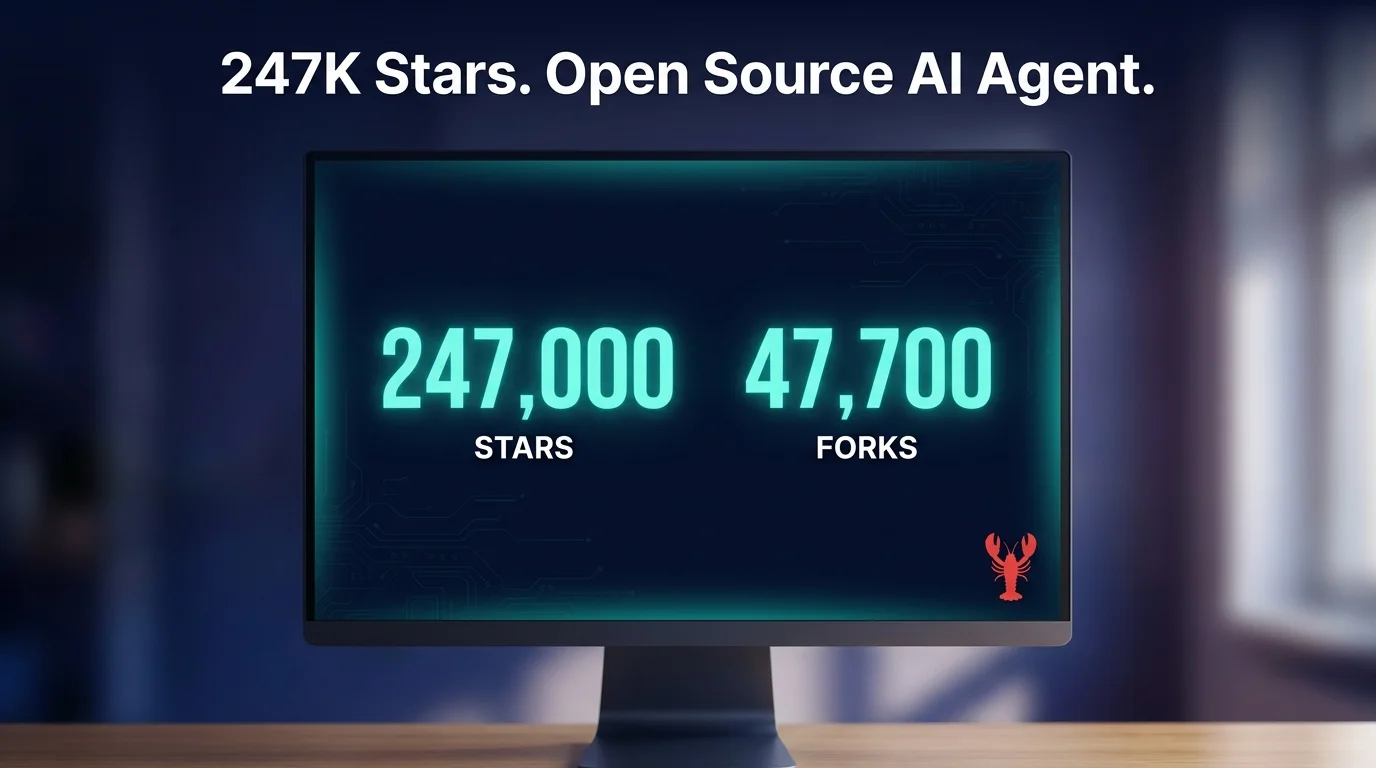
247,000 GitHub stars. 47,700 forks. Less than a year old — those three numbers are why "openclaw open source" is one of the most-searched phrases in AI right now, and why so many people land on the GitHub page confused about what any of it actually means for them.
Key Takeaways
- OpenClaw is fully open source under the GNU GPLv3 license — the code is public, auditable, and free for anyone to inspect or modify.
- As of March 2026, the project has 247,000+ GitHub stars and 47,700+ forks, making it one of the fastest-growing open-source AI projects on record.
- Open source means transparency and community control, not automatically "better" — you can see exactly how OpenClaw works, but running it yourself still takes real technical setup.
- OpenClaw has carried three names since its November 2025 launch — Clawdbot, briefly Moltbot, then OpenClaw — all referring to the same open-source codebase.
- The free open-source version requires a server, Node.js, and ongoing maintenance. OpenClawHQ is the managed alternative: $49/month flat, live in minutes, zero setup.
OpenClaw Open Source By the Numbers (March 2026 Snapshot)
| Metric | Value |
|---|---|
| GitHub stars | 247,000+ |
| Forks | 47,700+ |
| License | GNU GPLv3 |
| Original launch | November 2025 (as "Clawdbot") |
| Current name | OpenClaw (since January 30, 2026) |
| Messaging platforms supported | 20+ |
| Built-in skills | 100+ |
Those figures put OpenClaw in rare company. Most open-source projects take years to cross 10,000 stars. OpenClaw crossed 247,000 in under a year — and the fork count matters just as much as the star count, since forks measure people who copied the code to actually run or modify it, not just bookmark it.
By the numbers: A 247,000-to-47,700 star-to-fork ratio means roughly one in five people who starred the repo went further and forked it — an unusually high "intent to use" signal for a project this new.
Is OpenClaw Open Source, Really?
Yes. OpenClaw's full source code is published on GitHub under the GNU GPLv3 license, meaning anyone can read it, audit it, copy it, and modify it for their own use. There's no paid "core" hidden behind a license key — the same code that powers the official build is what you'd clone yourself. What it means in practice is the next question most people actually care about.
What Does It Actually Mean That OpenClaw Is Open Source?
Open source means the code isn't a black box — any developer can read exactly how OpenClaw decides what to do, verify it isn't doing anything shady with your data, and change it if they want a different behavior. For a non-technical reader, the short version is trust: thousands of people have already looked at this code, and nobody found a reason to walk away.
That's different from a closed AI product where you take the company's word for how it works. With OpenClaw:
- The full codebase is public on GitHub — no hidden logic
- Anyone with the skill can verify what data it touches and where it sends it
- Bugs and security issues get reported and fixed in public, not buried in a support ticket queue
- No single company can quietly shut it down — the GPLv3 license guarantees the code stays available
None of this requires you to read a line of code yourself. It just means the option exists, and enough developers have exercised it to build real confidence in the project. For a deeper breakdown of the star and fork counts themselves, OpenClaw's GitHub numbers are worth a closer look.
It's also worth separating OpenClaw from a basic chatbot here. An openclaw vs chatgpt comparison comes up constantly because people assume "AI you chat with" means the same thing everywhere — it doesn't. ChatGPT answers questions; OpenClaw autonomously browses the web, manages files, and executes multi-step tasks inside your messaging apps, and being open source is part of why it can keep growing that list.
Related: How Does OpenClaw Work? Chat App, Skills, Action
How Many GitHub Stars Does OpenClaw Have?
OpenClaw has 247,000+ GitHub stars and 47,700+ forks as of March 2026, making it one of the fastest-growing open-source AI agent projects ever tracked. For comparison, most popular open-source developer tools take three to five years to reach that star count. OpenClaw did it in under twelve months.
The growth wasn't a single viral spike either — it's been a sustained climb since the project's first public release.
Why Did OpenClaw Change Names Three Times?
OpenClaw launched as "Clawdbot" in November 2025, was briefly renamed "Moltbot" on January 27, 2026 after trademark pressure, then renamed "OpenClaw" three days later on January 30, 2026 — all three names refer to the exact same open-source codebase. The renames happened fast enough that search demand never caught up, which is why all three terms still pull real traffic today.
Search interest reflects that history clearly:
- "Clawdbot" — the original name, still pulling 60,500 searches per month
- "Moltbot" — the short-lived middle name, 27,100 searches per month
- "OpenClaw" — the current name, 165,000 searches per month
- "Claw bot" — informal shorthand people use, 2,900 searches per month
Worth knowing: If you see "Clawdbot" mentioned in an older tutorial or forum post, it's the same project — just before the second rename. Nothing about the underlying open-source code changed between names.
The renames also raise a question people ask almost as often as the star count: who actually owns OpenClaw? No single company does — the project sits under an independent foundation, which is part of why the open-source license matters so much here.
Can I Modify or Fork OpenClaw Myself?
Yes — the GPLv3 license explicitly permits forking, modifying, and redistributing OpenClaw's code, which 47,700+ people have already done. Forking is how open-source developers customize a project: you copy the entire codebase into your own repository and change whatever you want, from adding a new integration to rewriting how it handles a specific skill.
In practice, most people don't fork OpenClaw to rewrite it — they fork it to run their own private instance or experiment with a feature before it lands in the main project. Doing that still means:
- Installing Node.js 24 and the required dependencies
- Setting up a server that stays online 24/7
- Managing your own AI model API key and paying for tokens separately
- Handling channel authentication (WhatsApp QR codes, Telegram bot tokens, and similar) yourself
That last list is exactly where most non-technical users hit a wall — which is the real gap between "open source" and "usable by me right now." Once a fork is running, most people never touch the underlying code again; they just talk to it in plain language or trigger specific openclaw commands for repeatable tasks.
Why OpenClaw Being Open Source Matters for You (And Why Managed Hosting Is the Next Step)
 OpenClaw's contributor and star growth has climbed steadily since its November 2025 launch — not a one-time spike.
Being open source proves OpenClaw is real, auditable, and trusted by a large developer community — but it doesn't mean the software is free to operate, and it doesn't make setup any easier for a non-technical business owner. Those are two separate questions people often mix together: "is it legitimate" and "is it easy to run." Open source answers the first one convincingly. It says nothing about the second.
This is exactly where OpenClawHQ fits. Once you understand how OpenClaw works under the hood, running your own copy still means a server, a Node.js install, and ongoing maintenance — the same friction covered in detail in OpenClaw's no-code setup guide. OpenClawHQ skips all of that: you get a private, fully managed OpenClaw instance running in minutes, with every skill pre-installed and no command line involved, ever.
What's the Difference Between Free OpenClaw and OpenClawHQ Managed?
The OpenClaw software costs nothing, but running it requires a dedicated server, technical setup, and your own AI model API costs — OpenClawHQ replaces all of that with one flat $49/month price and unlimited usage, live in minutes. The code being free was never the barrier. The infrastructure and maintenance around it was.
| Self-Hosted (Free Code) | OpenClawHQ | |
|---|---|---|
| Software cost | $0 | Included in $49/mo |
| Server setup | You configure it | Done for you |
| Node.js / CLI install | Required | Not needed |
| AI model API costs | Billed separately, variable | Included, unlimited |
| Time to live | 2–8 hours (technical users) | 3–7 minutes |
| Ongoing maintenance | Your responsibility | We handle it |
What this means for you: "Free" software isn't the same as a free service. The code costs $0 either way — the difference is who spends the hours keeping it running.
If you want the fuller side-by-side on every cost and tradeoff, OpenClaw managed vs. self-hosted breaks down each option in more depth than the table above.
People who've already tried and given up on self-hosting tend to land here next, and what actual users say about OpenClaw once it's running backs up why the managed route holds appeal — the software itself gets consistently good marks; the setup process is where reviews turn sour.
 Open source builds the trust. Managed hosting removes the setup work.
Get Started with OpenClawHQ
You don't need to read GPLv3 license text or configure a Node.js server to benefit from OpenClaw being open source — you just need it running. OpenClawHQ gives you a private, fully managed instance in minutes, with unlimited usage for $49/month flat.
FAQ
Is OpenClaw actually free?
The OpenClaw software itself costs nothing — it's open source under GPLv3. But running it requires a server, technical setup, and your own AI model API usage, which adds real cost and time. OpenClawHQ covers all of that for $49/month flat, including unlimited AI usage.
What license does OpenClaw use?
OpenClaw is released under the GNU GPLv3 license, which guarantees the code stays open, modifiable, and freely redistributable. This is the same license family used by many major open-source projects, chosen specifically to keep the project independent of any single company.
Can I self-host OpenClaw for free forever?
Yes, technically — the code will always be free to run yourself. But "free" only covers the software; you'll still pay for server hosting, your own AI API usage, and the hours spent on setup and maintenance, which is why many people eventually switch to a managed option.
What's the difference between OpenClawHQ and self-hosting OpenClaw?
Self-hosting means installing Node.js, configuring a server, authenticating your channels, and managing updates yourself, plus paying your own API costs. OpenClawHQ handles all of it — your private instance runs in minutes for $49/month flat with unlimited usage and zero setup.